- Story 3/5
- Ease of access 4/5
- Character 3/5
- Time commitment 3/5
- Trigger/Glimmer 4/5
- Cosiness 4/5
- Overall 3.5/5
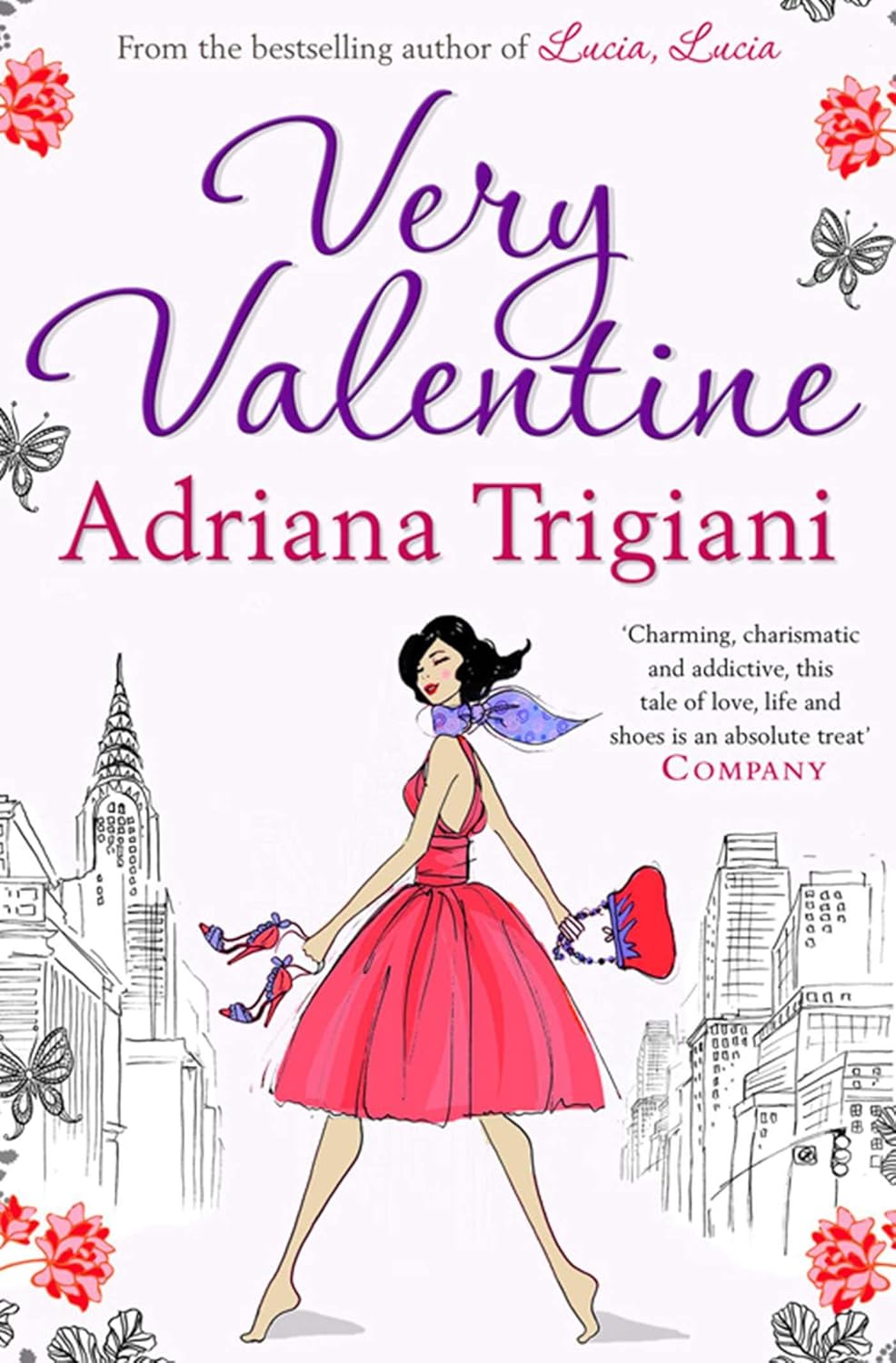
A fashion drama novel? I didn’t even know this was a genre! I also never thought I would read such a genre but here I am enjoying a dramatic and heartwarming cinderella story about an adult Italian-American woman chasing her dreams that she barely knew she had while a sexy Italian chef chases her after seeing her naked on a rooftop.
I swear I’ve never read something so steeped in Italian culture it makes me feel like I’m sitting down to wine and antipasto with mi Paisana! A country woman! Oh yes dear reader don’t let the Scottish surname fool you the blood of Romans courses deep in my veins!
And that is simultaneously where I hit roadblock after roadblock with Valentine Roncalli. You see in a brief history of Italy there is one eternal fact; North of Rome vs South of Rome and Adriana Trigiani is very much emulating the Italian-American/North Italian attitude where the part of me and many other South Italian readers will go; so much Tuscany? Why all the Florence? Even Milan gets a look in? What about Nappoli? Amalfi? Sorento and Sollerno!
But that is a conversation I will look forward to having with Miss Trigiani if she ever reads this; which I doubt she will. Which is too bad because as an actual story and not a reminder of the homeland of my Grandad her story is funny and with some genuinely heart gripping moments of familia.
But where there is good there must of course be bad. The story is a bit convoluted and fairy godmother like for me to be fully invested. Valentine is not a particularly strong female lead instead turning to other characters to help achieve her goals and while that is a commendable trait it reminds me too much of the damsel in distress trope. From initial success on a random google search to the secret war against her brother while never being actively aggressive towards him (even though he deserves a bloody good slap in the teeth) makes the plot quite slow to take off. I even wrote the review draft while reading the story which I never do because it feels like a relay race to the next plot point and the rest of my team are having to sit out for bad behaviour.
I also have one very petty niggle; the character names. Look I know I can’t talk from German/Italian aristocrats Jacob and Benjamin to a redhead called Ruby I barely have a leg to stand on but stand I will! Having an Italian chef called Roman Falconi and a lead Italian woman called Valentine is uncreative enough but when you start using renaissance Italian painters as the names of minor and major characters I draw the line. The two most clever names in the whole book are Teodora and Alfred and that should say enough about the names of the characters.
Something else I would like to comment on that I feel slightly alienated by the references to real world people like Grace Kelley and Jackie O I start to wonder is this something in the genre that I’m not quite getting or is it something in Trigiani’s style? If it is the former I gracefully retract my next comment but if it is the latter the use of real world examples in a work of fiction screams to me as a lack of imagination which I hate to say because I rarely see such descriptive storytelling meaning Trigiani must have excellent creativity.
From describing locations to clothes I’ve never thought much on the attire of men, it’s been suits for the last 200 years with only a slight change in head and neck wear to tell the decades apart (sit down cowboys bolo ties don’t count). But Trigiani describes them in such detail and so nuanced it’s given me a different outlook and as a steampunk writer, a likewise highly aesthetic genre, I can really appreciate her descriptors.
I suppose the occasional spelling error and grammatical issues should be mentioned but honestly after reading Tom Holt and Mercedes Lackey I can’t get worked up over spelling mistakes anymore; at least not unless they’re so bad they physically give me a headache and Trigiani doesn’t cause any issues like that. I think the only consistent underlining I had was the peppering of Italian in with the narration and although it’s common in dialogue using it when catching the reader up to speed at the start of a chapter threw me. Also there are a lot of filler words, words that add nothing and removing them will only give an advantage of making a book that feels it’s overstayed it’s welcome feel much friendlier to a new reader. I feel like this review was a lot of, this is good about the book…but then again this happened. As I thought about the good the bad seemed more glaring and bothersome and in the end I don’t know if that makes it a good book marred by some issues of culture, gender and genre alienation or a bad book I want to be good because I fell in love with the protagonist a little. Overall a good pleasant read in a genre I am definitely not the target market for and I will definitely be reading more of her work in the future; just not for a little while.

 Barons Bookshelf